
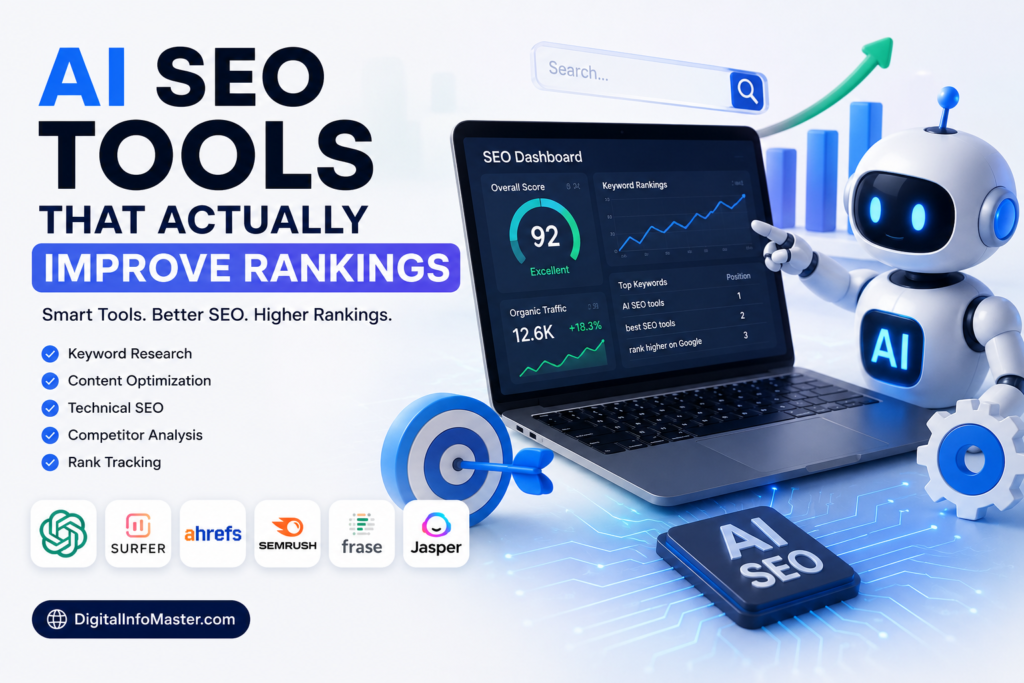
Search engine optimization is changing faster than ever, and artificial intelligence (AI) has become one of the biggest game-changers. From keyword research and content optimization to technical SEO and competitor analysis, AI-powered tools can save hours of work while helping you create content that ranks higher in Google.
However, not every AI SEO tool delivers real results. Some generate generic content, while others provide valuable insights that improve rankings, traffic, and conversions.
In this guide, we’ll explore the best AI SEO tools that actually improve rankings in 2026 and explain how to use them effectively.
Why AI SEO Tools Matter
AI doesn’t replace SEO experts—it makes them more productive. Modern AI tools help marketers:
- Find low-competition keywords
- Analyze search intent
- Create SEO-friendly content
- Optimize existing articles
- Detect technical SEO issues
- Build better content strategies
- Save time on repetitive tasks
When combined with human editing and SEO best practices, AI tools can significantly improve website performance.
1. ChatGPT
ChatGPT is one of the most powerful AI assistants for SEO professionals.
Best For
- Content planning
- Keyword clustering
- Blog outlines
- Meta titles
- Meta descriptions
- FAQ generation
- Schema ideas
Pros
- Fast content creation
- Excellent brainstorming
- Saves hours of research
- Supports multiple writing styles
Cons
- Requires human fact-checking
- Needs good prompts for best results
2. Surfer SEO
Surfer SEO combines AI with data-driven content optimization.
It analyzes the top-ranking pages and recommends:
- Keyword usage
- Headings
- Content length
- NLP terms
- Internal links
This helps create content that’s optimized for Google’s ranking factors.
3. Ahrefs AI Features
Ahrefs remains one of the most trusted SEO platforms.
Its AI-powered features help with:
- Keyword research
- Competitor analysis
- Backlink opportunities
- Content gap analysis
- SERP monitoring
If your goal is organic traffic growth, Ahrefs is still among the best investments.
4. SEMrush AI Toolkit
SEMrush now includes AI-powered recommendations for SEO and content marketing.
It helps you:
- Discover trending keywords
- Audit websites
- Improve on-page SEO
- Track rankings
- Analyze competitors
The AI suggestions make optimization much faster.
5. Frase
Frase specializes in AI content optimization.
It analyzes Google’s top-ranking pages and recommends:
- Missing topics
- Search intent
- FAQs
- Semantic keywords
- Content improvements
Many bloggers use Frase to refresh old articles and increase rankings.
6. NeuronWriter
NeuronWriter uses NLP technology to optimize content.
Key features include:
- Competitor analysis
- NLP keyword suggestions
- AI writing assistance
- Internal linking recommendations
- Content scoring
It is especially useful for niche websites.
7. Jasper AI
Jasper is ideal for creating marketing content quickly.
You can generate:
- Blog introductions
- Product descriptions
- Social media posts
- Landing pages
- SEO content drafts
While it speeds up writing, manual editing is still essential.
8. Screaming Frog SEO Spider
Although not a traditional AI tool, it integrates with AI workflows and remains essential for technical SEO.
It helps identify:
- Broken links
- Duplicate content
- Redirect issues
- Missing meta tags
- Crawl errors
Technical SEO is still one of the strongest ranking signals.
9. Google Search Console
Google Search Console is completely free and provides valuable data directly from Google.
Use it to:
- Track keyword performance
- Monitor indexing
- Detect coverage errors
- Improve Core Web Vitals
- Find pages losing rankings
Every website owner should use it.
10. Google Gemini
Gemini is becoming a powerful research assistant.
It helps with:
- Content ideas
- Topic research
- Competitor summaries
- SEO brainstorming
- Workflow automation
Used alongside other SEO tools, it improves content quality.
Tips for Using AI SEO Tools Effectively
To achieve better rankings:
- Focus on user intent instead of keyword stuffing.
- Always edit AI-generated content before publishing.
- Add original insights, screenshots, and examples.
- Build strong internal links.
- Keep content updated regularly.
- Optimize page speed and mobile usability.
- Earn high-quality backlinks from trusted websites.
Common Mistakes to Avoid
Avoid these mistakes:
- Publishing AI content without editing
- Ignoring search intent
- Creating duplicate articles
- Overusing keywords
- Forgetting technical SEO
- Not updating old content
Google rewards helpful, original, and trustworthy content—not content created solely by AI.
Final Thoughts
AI SEO tools have become essential for bloggers, marketers, and businesses in 2026. They can dramatically reduce research time, improve content quality, and help websites compete in search results.
The best strategy is to combine AI with human expertise. Use AI to speed up research and optimization, but always add your own experience, examples, and unique insights. This combination produces content that both readers and search engines appreciate.
If you’re serious about improving your Google rankings, start with tools like ChatGPT, Surfer SEO, Ahrefs, SEMrush, Frase, and Google Search Console. Used correctly, they can become valuable assets in your long-term SEO strategy.